75 years of the Global Refugee Regime
Catherine Grant Makokera, Executive Director of NZIIA
2026-06-29
NEW ZEALAND
MIGRATION
The global refugee regime is celebrating 75 years since the 1951 Refugee Convention was put in place to provide protection for those forced to flee their homes. The United Nations Refugee Agency (UNHCR) reports that there are over 41 million refugees out of a total of more than 117 million people forcibly displaced in the world today. That is 1 in 70 people that are not able to live in their homes due to conflict, violence or persecution.
Those in conflict areas bear the burden of the challenge but New Zealand is among a small number of countries that still offers the opportunity for resettlement to refugees under the process managed by UNHCR. In fact, New Zealand is now taking the 3rd largest number of resettlement refugees with a quota of 1500 every year.
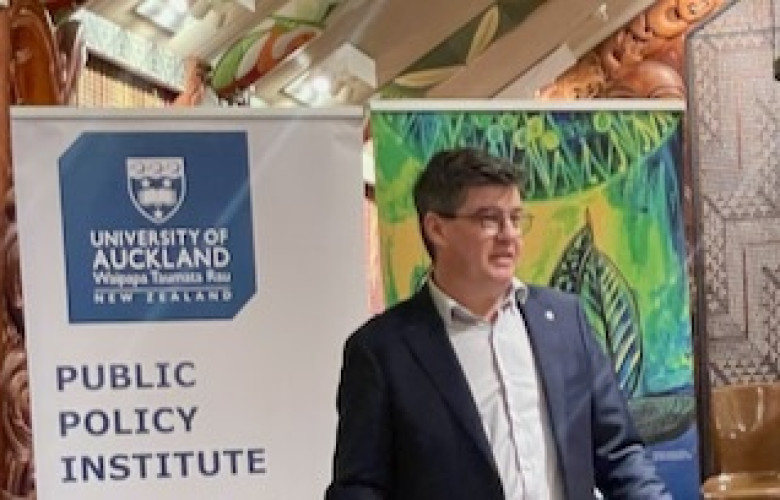
NZIIA, together with the Centre for Asia Pacific Refugee Studies and the Public Policy Institute at the University of Auckland, hosted the UNHCR at a fascinating discussion on Friday 26 June 2026. Ben Farrell, Head of External Engagement, UNHCR Regional Representation in Canberra, outlined the scale of the refugee crisis. He called for more flexibility to respond to urgent cases and support to maintain the global resettlement system that could wither away in the face of funding cuts and reductions in participation by host countries. UNHCR is working on solutions to reduce by half, over the next decade, the number of refugees in long-term displacement reliant on humanitarian assistance. This includes voluntary returns, inclusion of refugees in national systems, resettlement and local integration through education and work opportunities.
Madiha Ali, refugee lawyer with Dixon and Co, expressed frustration at the delays in the New Zealand system for dealing with asylum applications. She called for more complimentary pathways to resettlement that do not erode the current quota but are additional. For example, the Community Organisation Refugee Sponsorship programme does not add to the existing response. Madiha is one of the authors of new report released by World Vision New Zealand and the Centre for Asia Pacific Refugee Studies calling for New Zealand to introduce an Emergency Protection Framework to provide more consistent and effective support for people displaced by conflict, disasters, and humanitarian emergencies. The report is available to read here.
The third speaker was Professor Yvonne Underhill-Sem of the University of Auckland. She described the geopolitical framing of the current situation and the shifts towards securitisation at the expense of humanitarian assistance. Climate change is a driver for people to move and requires ongoing solidarity in the Pacific as responses are developed.

Membership
NZIIA membership is open to anyone interested in understanding the importance of global affairs to the political and economic well-being of New Zealand.