Japanese frigate may be a lifeline for New Zealand’s maritime security
Tadashi Iwami, Hokkaido University
2026-01-09
ASIA
DEFENCE AND SECURITY
This article firs appeared on the East Asia Forum
That China — New Zealand’s largest trading partner — undertook military operations along sea lanes serving as the nation’s economic lifeline was a harsh wake-up call, sending shockwaves throughout the country and exposing a critical surveillance gap.
These events confirmed Wellington’s strategic shift towards greater security alignment with like-minded partners such as Japan. China’s growing maritime presence in the Pacific before the incidents had been accelerating this shift. Critical developments include the 2022 China–Solomon Islands security pact, New Zealand’s 2023 National Security Strategy, which cited Beijing as a ‘major driver’ of geostrategic competition, and its attribution of parliamentary cyber-attacks to the Chinese state-sponsored group APT40 in 2024.
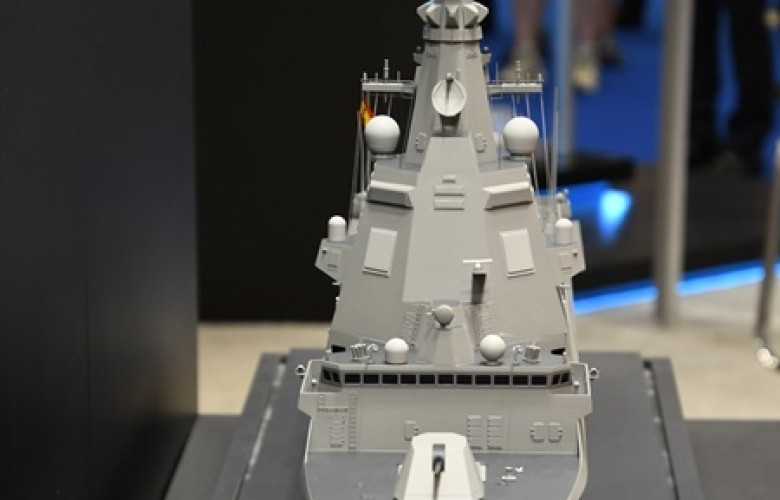
New Zealand formally conveyed its interest in Japan’s ‘New Mogami-class’ frigates (New FFM) in November 2025, following Australia’s selection of the same vessel in August. Coinciding with the signing of the Acquisition and Cross-Servicing Agreement and the Information Security Agreement on 19 December 2025, this signals the beginning of a new phase in defence cooperation between Wellington and Tokyo.
Japan’s New FFM offers a rational solution for New Zealand, potentially even a lifeline, to address the Royal New Zealand Navy’s (RNZN) predicament.
Its most compelling feature is high automation. While current ANZAC-class frigates require a crew of about 170, the New FFM operates with just 90. This radical reduction directly addresses the RNZN’s crippling personnel shortage.
Beyond staffing, the vessel’s 10,000-nautical-mile range aligns with New Zealand’s responsibility for an Exclusive Economic Zone 15 times its landmass, alongside a vast search and rescue area (30 million square kilometres). The New FFM’s range facilitates long-range missions essential for Pacific operations.
The New FFM’s platform also offers the combat scalability of vertical launch systems for future air defence, as well as high compatibility with the RNZN’s incoming MH-60R Seahawk helicopters and P-8A Poseidon maritime surveillance aircraft already in service.
These strategic advantages offer more than a comparative edge in specifications. For the RNZN facing the dual pressures of a severe personnel deficit and a deteriorating security environment in the region, the New FFM represents a viable path to restoring operational readiness.
Yet the acquisition is fraught with technical, human and financial hurdles. The most significant technical barrier is the incompatibility of combat management systems (CMS). The RNZN currently relies on the Canadian-made CMS 330, whereas the Japanese vessels utilise a Japanese-developed proprietary CMS.
Integrating a non-native CMS into the Japanese hull poses high technical risks of cost overruns and delivery delays. Australia’s decision to accept the Japanese configuration for its initial batch of three frigates, rather than risk immediate integration issues, underscores this challenge.
Beyond hardware, the shift to a highly automated platform demands a significant transformation in operational skills and culture. But the Japan Maritime Self-Defence Force is still in the process of accumulating its own know-how for New FFMs.
The tyranny of distance complicates logistics and lifecycle costs. For New Zealand, maintaining a long supply chain with Japan alone is unrealistic in terms of transport costs and lead times.
The key to overcoming these hurdles lies in strategic synergy with Australia — perhaps through the realisation of an ‘ANZAC Ship Project 2.0’ (ASP 2.0). This initiative would replicate the success of the 1990s, when both nations acquired and operated a common frigate class, but adapted for the New FFM era. A combined fleet of 13 vessels — including 11 from Australia and an anticipated two from New Zealand — would establish a ‘Mogami ecosystem’ in the Pacific, comparable in scale to the major naval powers of the G7.
Leveraging this economy of scale would allow for an integrated yet distributed supply chain. Australia’s maintenance, repair and overhaul facilities could serve as a regional hub for heavy maintenance, while New Zealand can retain local capabilities for routine light maintenance.
Crucially, ASP 2.0 offers the potential to move beyond traditional ‘interoperability’ and towards genuine ‘interchangeability’. This would allow both navies to mutually supplement personnel shortages and, in the future, operate their fleets as an integrated unit. Japan’s fleet could also be seamlessly integrated into this framework.
For Japan, exporting the New FFM serves as a critical opportunity to validate the effectiveness of the ‘Mogami ecosystem’ and drive the evolution of the national defence industry. Establishing a viable operational model in New Zealand will act as a litmus test for future expansion into ASEAN and other Pacific Island nations. This move aligns directly with the Takaichi administration’s policy initiative to abolish regulations surrounding the ‘five categories’ of arms exports in fiscal year 2026.
The project’s success will determine whether Japan’s defence sector can pivot from being a mere manufacturer of hardware to a permanent security service provider capable of supporting lifecycle maintenance as well as capability upgrades that ensure long-term stability in the Indo-Pacific.
If successful, Japan’s New FFM will stand as the physical and operational embodiment of the 2013 Strategic Cooperative Partnership with New Zealand — a partnership that has finally fulfilled its strategic promise.
Photo: Hunini, CC BY-SA 4.0 <https://creativecommons.org/licenses/by-sa/4.0>, via Wikimedia Commons

Membership
NZIIA membership is open to anyone interested in understanding the importance of global affairs to the political and economic well-being of New Zealand.