NATO, defence spending and the Indo-Pacific region
Hamish McDougall
2025-12-01
EUROPE
DEFENCE AND SECURITY
From the Nov/Dec Edition of 'New Zealand International Review'
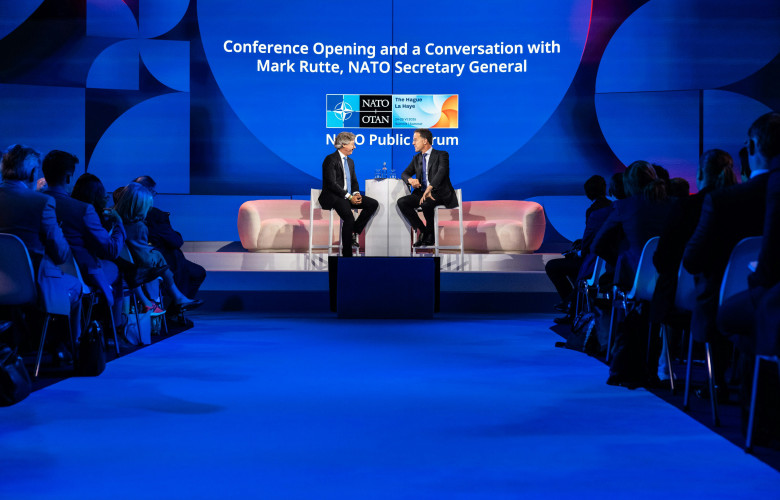
In June heads of government (and other ministers) of NATO’s members met in The Hague for the alliance’s 2025 Summit. Alongside this gathering, the NATO Public Forum brought together approximately 500 think-tankers, academics, non-governmental organisation representatives, journalists, diplomats and other experts for a series of keynote addresses and discursive panel discussions, designed to communicate the adjacent summit’s rationale and results to the broader public. An important conclusion from the Public Forum is that NATO and its member states, including the Netherlands as host country, are deeply committed to engaging their publics on the changing international situation and how best to respond.
The journey from New Zealand to the NATO Public Forum in The Hague in June 2025 told its own story of the deterioration in international affairs. Following a Shanghai stopover, the KLM jet bound for Amsterdam Schiphol skirted much of Russia’s southern border, with further lengthy doglegs avoiding war-torn Ukraine, Israel–Palestine and Iran, the latter having its nuclear sites bombed at the time by the US Air Force. A train transfer from Amsterdam to The Hague saw further delays because of sabotaged tracks, caused by what Netherlands police described as a ‘criminal act,’ although it is unclear if international actors were involved. Once arrived in the Netherlands capital, as well as harried diplomats and jet-lagged delegates, the streets were jammed with some 27,000 police (about half the Netherlands’ entire force) and 10,000 military personnel. Helicopters and drones incessantly buzzed overhead while motorcades roared past, carrying NATO heads of government to the summit’s tight security compound on the city’s outskirts. In cyberspace, pro-Russian hackers reportedly disrupted the event’s websites and live broadcasts.1
The NATO Summit rather famously brings together the military alliance’s heads of government (and other ministers) for periodic important discussions, officially described as ‘key moments’ in NATO’s direction. Focused almost exclusively on defence and military collaboration, the 2025 Summit aimed to make the alliance ‘stronger, fairer and more lethal.’2 Perhaps less well known is the NATO Public Forum, to which I was invited, held alongside the summit. The forum collates approximately 500 think tankers, academics, non-governmental organisation representatives, journalists, diplomats and other experts for a series of keynote addresses and discursive panel discussions, designed to communicate the adjacent summit’s rationale and results to the broader public. The Netherlands’ Prime Minister Dick Schoof accordingly used his opening keynote address to the Public Forum to outline the summit’s objectives in careful diplomatic language, emphasising unity, burden sharing, security and success.3 However, the delegates in the audience were abuzz with the rather less tactful pre-summit text messages sent from NATO Secretary-General Mark Rutte to US President Donald Trump, congratulating and thanking the president for his actions in attacking Iran, ‘which makes us all safer.’ Rutte apparently told Trump that his pressure to have allies increase their defence spending means ‘Europe is going to pay in a BIG way, as they should, and it will be your win,’ achieving what ‘NO American president in decades could get done’.4
Rutte’s sycophantic, if tactically astute, messages were later compounded by his referring to Trump as ‘daddy’ in the post-summit media conference. They seemed to plainly lay out NATO’s primary objective for the summit, which was to have its nation-state members agree to increase defence spending to 5 per cent of GDP, presenting this as a ‘win’ to a NATO-sceptical US president in a way that encouraged the United States not to diminish its longstanding commitment to the alliance, nor unduly undermine Ukraine’s efforts to secure an equitable end to its war with Russia.
On this very simple metric, the NATO Summit can be considered a success. Scepticism from some alliance members, including Spain, Belgium, Turkey and others, was overcome in a display of unity that gave the US president his ‘success.’ There was no disastrous proclamation by Trump either about NATO or the Russo-Ukraine War, thanks in part to a truncated agenda and a partial sidelining of Ukraine’s President Volodymyr Zelensky at the event. However, as the NATO Public Forum (if not the summit) made clear in myriad ways, securing commitments to spend 5 per cent of GDP on defence is a relatively straightforward political step. Much harder work is required to genuinely achieve such spending targets in efficient and effective ways. There is plenty of nuance beyond the overall figure, not least that 3.5 per cent of GDP aspires to be spent on ‘core military spending,’ still an eye-wateringly high figure across NATO membership, while 1.5 per cent is to be applied to broader ‘defence and security-related activity,’ which can include infrastructure and cyber security. As one example, there was conjecture that Italy’s huge infrastructure spending on a bridge to Sicily would be included in its contribution, although the Italian government has since denied this.5
It should be noted that despite the NATO Summit agreements, at the time of writing, some months later, it is by no means clear that NATO is out of the woods on a US retrenchment of its trans-Atlantic commitments. US Ambassador to NATO Matt Whitaker told the forum in June that ‘the United States isn’t going anywhere,’ and that it has ‘never been more engaged [with NATO],’ but these claims were met with incredulous laughter from some in the audience.6 Indeed, Washington has a revision of its National Defense Strategy and associated Posture Review underway, which may see a large redeployment of American troops away from Europe back to the United States or elsewhere in the Indo-Pacific region. Nor is it clear where the RussoUkraine War is heading. Yet, NATO members keen to keep the US president onside and prevent an abandonment of Ukraine seemed to take considerable heart from the summit.
There was significant discussion at the forum about how best to overcome the perennial trade-offs required within NATO between the ‘ideal’ and achieving ‘consensus.’ Deep questions remain about the ability of institutions created during the Cold War-era to respond to modern challenges, especially without US leadership. The interests of 32 member countries and a network of additional partners inevitably water down the most robust of proposals. In this, the NATO Public Forum generated some interesting suggestions, including potentially establishing an entirely separate organisation to deliver Europe’s increased defence spending in a way that promotes innovation and insulates it from prevaricating, heel-dragging members. Precedent exists in the form of the 1985 Schengen Agreement. This was created outside European Community auspices, thereby excluding the least committed members and bringing in four nonmembers from outside, in a treaty establishing principles for the free movement of goods and people. It is a thought-provoking proposition, echoing that put forward by Lise Howard and Michael O’Hanlon in Foreign Affairs, in which they argue that creating an entirely new organisation could help broker and maintain peace in the Russo-Ukraine War.7 There are echoes, too, of French President Emmanuel Macron’s recent call for a new European–Asian alliance against ‘spheres of coercion’.8
Of course, NATO has also considered how best to achieve the spending increases effectively and efficiently. A substantial part of this is engaging with the very rapidly evolving technologies employed in war, defence and security. Here, learning from the front-line experiences of Ukraine is seen as crucial. Even if Ukraine’s future NATO membership is unclear, policy-makers in NATO’s headquarters are keen to use Ukraine’s considerable first-hand military technological expertise for Europe’s broader future defence. A further consideration is engaging with the fast-moving tech sector to deliver defence capability. To move beyond an over-focus on standardisation at the expense of innovation, NATO, amongst other initiatives, is running its own Defence and Innovation Accelerator for the North Atlantic (DIANA), and has its own innovation fund with US$1 billion in commitments for investing in emerging technologies. ‘Defence and resilience’ tech, much of which has dual-purpose in both military and civil applications, has gone from a no-go space for investors to attracting a colossal amount of private sector investment, estimated at around 10 per cent of all venture capital in Europe.9
Such rhetoric, commitment and action all serve to underline that Europe is a serious security player, spurred as it is by the war in Ukraine. Indeed, that war was never far from the lips of nearly all the NATO Public Forum participants, emphasising the continued need for NATO to increase its deterrence of further Russian aggression, as well as provide all help necessary to Ukraine. In some senses, this is unsurprising at an event aiming to smooth the political path for increased European defence spending. However, slightly more remarkable, was the forum’s lack of placing Europe’s security considerations and the RussoUkraine War in global or Indo-Pacific contexts.
In our part of the world, we are aware of various Indo-Pacific strategies and see plenty of public debates about how New Zealand and others should respond to US–China competition, reduced US engagement in multilateral forums and other factors encouraging instability. In contrast, there was little discussion at the NATO Public Forum as to how elements in the Indo-Pacific region are affecting the war in Ukraine or broader North Atlantic security. For example, the attitudes of China and, to a lesser extent, India seem to be key to maintaining Russia’s war effort and broader economy. As a further example, an Indo-Pacific country, North Korea, has troops fighting on the Ukraine frontlines. The United Nations, including its Asian and Pacific members, may yet play a key role in brokering and keeping peace in Ukraine and elsewhere. Yet so much of the discussion in The Hague ignored or avoided such Indo-Pacific connections, even if they might produce some eventual solutions to the conflict, or serve to constrain further Russian aggression.
The lack of NATO-focus on the Indo-Pacific at the Public Forum may reflect elite political considerations. Views in the White House seem to be split on whether Europeans should take an active role in Indo-Pacific security, including the institutionalised involvement of the ‘Indo-Pacific Four’ as NATO partners, meaning the grouping of Australia, New Zealand, Japan and South Korea. Some in the current administration, most notably Elbridge Colby, US under-secretary of defense, have publicly stated that Europeans need to sort out their own regional defence first, and NATO’s engagement in the Indo-Pacific is not particularly helpful. Others within the US administration, including hawks seeking containment of China, presumably welcome North Atlantic and Indo-Pacific connections, although the mixed messages make it far from clear. For his part, Trump failed to meet with the Indo-Pacific Four at the NATO Summit, citing a scheduling issue.
All of this makes New Zealand Prime Minister Christopher Luxon’s attendance at the NATO Summit in June even more interesting. Coming directly from a meeting with Xi Jinping in Beijing, Luxon was the only leader of the ‘Indo-Pacific Four’ to attend, although the others did send senior ministers, including Australian Deputy Prime Minister and Defence Minister Richard Marles, who spoke at the forum (while Luxon did not). Japan’s Prime Minister Shigeru Ishiba reportedly cancelled his NATO attendance at late notice because of unhappiness with United States’ proposed tariff measures. Luxon’s attendance reflects a rather interesting journey the New Zealand government has made regarding NATO. In the space of two to three years, New Zealand has arguably moved from being the least to most enthusiastic of the ‘Indo-Pacific Four’.
Why is this? At a superficial level, the prime minister and his officials enjoy additional opportunities provided by NATO to meet with fellow leaders and senior ministers, especially when elsewhere there is a mushrooming of minilateral defence and security arrangements not involving New Zealand. It also reflects a now longstanding trend across several New Zealand governments to gravitate towards ‘traditional partners’ such as the United States and United Kingdom in the context of a deteriorating security environment. Undoubtedly there are North Atlantic security learnings, solutions and resources that can be applied to the Pacific. An on-going contribution to Ukraine’s war effort, maritime security and protection of undersea cables, responding to cyber and hybrid threats and application of Arctic and Antarctic security measures while preserving the environment all seem to provide areas of potential New Zealand collaboration with NATO and its member states. New Zealand likely also sees opportunities to expand the Indo-Pacific Four relationships into other areas and forums, such as APEC and others. In the context of unreliable US leadership in multilateral forums, seeking greater engagement with European and Indo-Pacific Four countries sharing similar values seems to have some gen- uine benefits. Such moves may not all be about ‘containing China’, as some New Zealand commentators have suggested (although relations with China are undoubtedly a consideration.)
An important conclusion from the Public Forum is that NATO and its member states, including the Netherlands as host country, are deeply committed to engaging their publics on the changing international situation and how best to respond. Hosting the NATO Public Forum in a bespoke, tented city attended by hundreds of media and delegates alongside the official engagements demonstrates the importance of not insulating the policies or politics from public engagement, either physically or metaphorically. The format was effective, involving discursive panels consisting of experts from a range of backgrounds. The expert speakers were often willing to critique official positions and interact with each other on stage. Such Socratic dialogues, especially when solution-focused, made for valuable content. Even when politicians and senior officials took to the stage, their statements were held to account by journalists moderating the proceedings, who were largely unwilling to let implausible or untruthful statements stand without further questioning.
The estimated €184 million spent on the NATO Summit and Public Forum obviously dwarfs anything New Zealand could afford in public diplomacy (although perhaps an in-person hosting of APEC is comparable). Nonetheless, there can be lessons here for New Zealand to apply. It is crucial that as New Zealand’s foreign, defence and trade policies continue to evolve, sometimes rapidly, experts from government, business, non-governmental organisations, academia and thinktanks need broader public engagement to gather and share views, and explain rationale.
Dr Hamish McDougall is the New Zealand Institute of International Affairs’ executive director, although the views here are personal and not those of the institute. The organisers of the NATO Public Forum 2025 paid his travel expenses to attend.
Notes
1. ‘Dutch government says pro-Russian hackers target municipalities linked to this week’s NATO summit,’ AP News, 24 Jun 2025 (apnews.com/article/nato-summit-cybersecurity-hack-russia-neth erlands-fa97bbf8797a51c2885d47f5f83691be).
2. ‘NATO concludes historic Summit in The Hague,’ Media Release, 25 Jun 2025 (www.nato.int/cps/en/natohq/news_236516.htm).
3. ‘Speech by Prime Minister Schoof of the Netherlands at the NATO Public Forum, The Hague,’ 24 Jun 2025 (www.government.nl/gov ernment/members-of-cabinet/dick-schoof/documents/speeches/2025/06/24/speech-pm-schoof-at-nato-public-forum-in-thehague).
4. Will Weissert, ‘“Dear Donald.” Trump posts a fawning private text from NATO chief on social media’, 25 Jun 2025 (apnews.com/ar ticle/trump-rutte-text-message-nato-signal-6263810ac3ca77a5b f7366499f51c772).
5. Tom Kington, ‘Italy disavows plan to count massive Sicily bridge as NATO spending,’ Defense News, 4 Sep 2025.
6. ‘NATO Summit 2025 — Public Discussion with U.S. Ambassador to NATO Matt Whitaker’ (www.youtube.com/watch?v=PtxDgnJewlg).
7. Lise Morjé Howard and Michael O’Hanlon, ‘The Case for a Security Guarantee for Ukraine’, Foreign Affairs, 20 Mar 2023.
8. ‘Macron calls for Europe and Asia to unite and resist “spheres of coercion”’, IFRI (www.ifri.org/en/media-external-article/macroncalls-europe-and-asia-unite-and-resist-spheres-coercion).
9. ‘Defence, Resilience and Security in Europe,’ Dealroom, 12 Feb 2025 (dealroom.co/reports/defence-resilience-and-security-ineurope).
Dr Hamish McDougall is the New Zealand Institute of International Affairs’ executive director, although the views here are personal and not those of the institute. The organisers of the NATO Public Forum 2025 paid his travel expenses to attend.

Membership
NZIIA membership is open to anyone interested in understanding the importance of global affairs to the political and economic well-being of New Zealand.