New Zealand’s naval future with Japan awaits a signature
Tadashi Iwami, Hokkaido University
2026-07-17
NEW ZEALAND
DEFENCE AND SECURITY
This article first appeared on the East Asia Forum
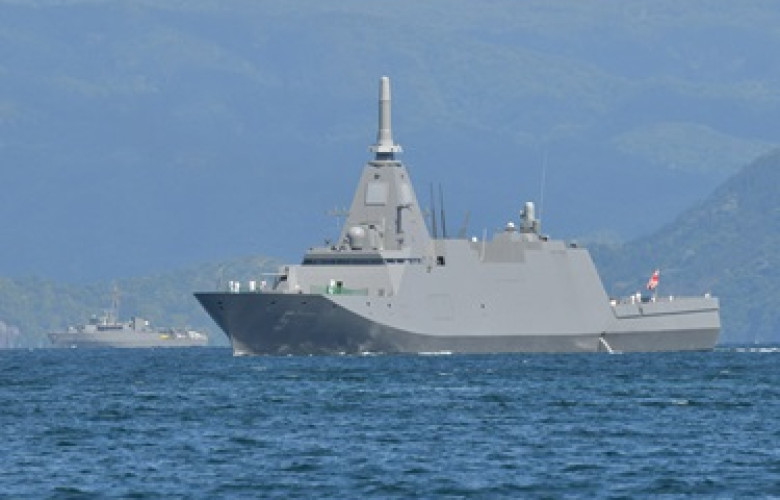
On 21 April 2026, Japanese Prime Minister Sanae Takaichi’s cabinet abolished the rule that had confined the country’s defence exports to five non-lethal categories — rescue, transport, warning, surveillance and minesweeping. Japan had eased its long-standing export ban in stages since 2014, but major lethal platforms such as warships had remained off-limits. The April 2026 decision changed that. It marked a turning point not only for Japan’s security policy, but also for the immediate future of New Zealand’s navy and its deepening relationship with Tokyo.
Three days earlier, Australia had signed its first contract with Mitsubishi Heavy Industries for three upgraded Mogami-class frigates. For Australia, the legal groundwork was already in place. Canberra and Tokyo had concluded an Equipment and Technology Transfer Agreement (ETTA) back in 2014.
Developments across the Tasman followed. On 7 May, New Zealand Defence Minister Chris Penk announced that Japan’s Mogami-class — the same class that Australia selected — and the United Kingdom’s Type 31 frigates were the two contenders to replace the Royal New Zealand Navy’s ageing ANZAC-class frigates. A recommendation is expected to reach Cabinet before the end of 2027.
At the Shangri-La Dialogue in Singapore at the end of May 2026, the defence ministers of Japan, Australia and New Zealand held their first-ever trilateral defence meeting, followed by a second meeting at the NATO Ankara Summit on 7 July. The meeting itself was a sign of how rapidly the three countries have aligned. It also brought ‘ANZAC Ship Project 2.0’ a step closer.
Yet a critical barrier remains. There is still no ETTA between New Zealand and Japan, even after the Japan–New Zealand foreign ministerial meeting held in Tokyo on 10 July.
If New Zealand chooses the upgraded Mogami-class frigate, Takaichi’s reform alone will not make the sale legal. Tokyo will also need the bilateral legal foundation of an ETTA before it can export the ships to New Zealand. The United Kingdom faces no comparable requirement, giving it an advantage over Japan in the procurement process.
The requirement for an ETTA is a product of Japan’s post-war pacifism. The 1967 Three Principles on Arms Exports tightened throughout the 1970s into a near-total ban, a self-imposed restraint that became part of how Japan defined itself as a ‘peace-loving’ nation. Former prime minister Shinzo Abe relaxed that ban in 2014 but made each transfer conditional on a bilateral ETTA obliging the recipient not to misuse or re-transfer the equipment without Japan’s consent.
Even after Takaichi’s April 2026 reform, the framework still permits exports of finished lethal defence products only to ETTA partners. Japan has 18 such agreements as of June 2026, including with every Five Eyes member except New Zealand. Tokyo confirmed the transfer of five soon-to-be retired Abukuma-class destroyer escorts to the Philippines under the Japan–Philippines ETTA in July 2026.
New Zealand has every reason to be interested in Japan’s Mogami-class frigates. Wellington’s two ageing ANZAC-class frigates must be replaced by the mid-2030s and its navy is stretched. With Australia soon to operate the same Japanese-designed ships, substantive interoperability and possible interchangeability to operationalise the ANZAC alliance by 2035 are powerful inducements. Signing an ETTA with Japan would open the door to all of this.
The New Zealand public is also increasingly comfortable with closer defence cooperation with Japan. Survey evidence indicates that New Zealanders now see Japan as their closest friend and most important defence partner in Asia. Japan is also now the most trusted partner after Australia, having overtaken the United Kingdom for the first time.
But prospects for an ETTA could become uncertain if such an agreement is not signed until after the New Zealand general election planned for 7 November 2026. The current National Party-led government has a strong case for signing, having already concluded two bilateral defence and security agreements with Japan.
Yet the electoral race is tight. A July poll placed Labour ahead of National by 34 per cent to 29 per cent, but projected that the governing National-led coalition would retain power by the narrowest possible margin of 61 seats to 59. Labour has so far taken no clear public position on the ETTA or the Mogami-class frigate. A Labour government would likely take a similar path, but uncertainty remains.
While more than a decade has passed between Australia’s ETTA with Japan and the signing of its Mogami contract, in today’s geostrategic environment, New Zealand and Japan may not have the luxury of time. Yet there is reason for cautious optimism on the ETTA front. Tokyo and Wellington could conceivably conclude their own ETTA sooner rather than later, as Japan did with Canada in January 2026.
Even so, the pathway to procurement is complicated. Rising ship costs and questions over industrial capacity, long-term maintenance infrastructure and crew training are factors which will shape the choice Wellington will make in 2027.
Nonetheless, if New Zealand chooses the Mogami over the Type 31, then the ETTA is one of the critical missing ingredients. Without it, New Zealand, Japan and Australia legally cannot achieve the trilateral interoperability and interchangeability that Japanese Defence Minister Shinjiro Koizumi publicly endorsed at the 2026 Shangri-La Dialogue.
Signing the ETTA would test not just Japan’s new rules on defence exports, but whether Wellington, Tokyo and Canberracan build and sustain the ‘Mogami ecosystem’ for maritime security in the Pacific. With the momentum in place, Wellington and Tokyo must now walk the talk.
Tadashi Iwami is Lecturer of International Relations at the Modern Japanese Studies Program, Hokkaido University.

Membership
NZIIA membership is open to anyone interested in understanding the importance of global affairs to the political and economic well-being of New Zealand.