The Marshall Islands’ experiment with a universal basic income
Dr Monique Taylor, University Lecturer in World Politics, Faculty of Social Sciences, University of Helsinki
2025-12-08
PACIFIC
GEOPOLITICS
This article first appeared on The Interpreter, published by the Lowy Institute
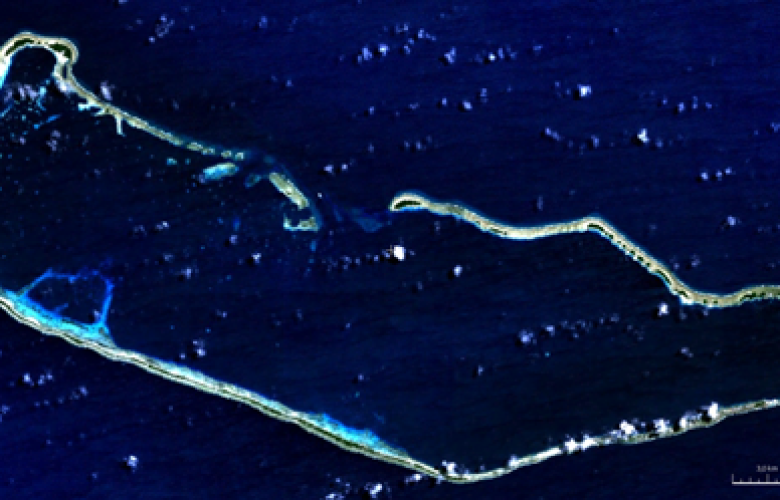
The Republic of the Marshall Islands is embarking on one of the world’s most ambitious experiments in universal basic income (UBI). Beginning on 26 November 2025, the government introduced a nationwide UBI scheme that provides regular cash transfers to all resident Marshallese citizens, including children. Given its status as a remote island state with a small tax base, high aid dependence and acute climate vulnerability, the country’s UBI program represents an unusually bold effort to transform external resources into a direct and undiluted citizen entitlement.
According to the International Monetary Fund, the UBI program, called the Individual Support Distribution, otherwise known as Enra, is expected to cost around 8.1% of GDP once fully implemented. A related scheme, the Extraordinary Needs Distribution (END) program, will add a further 6% of GDP. These parallel programs reflect both universal income aims and outer island development.
Enra provides approximately US$200 quarterly to each resident citizen, amounting to US$800 per year. As of September 2025, over 33,000 resident Marshallese citizens had enrolled in the program. The government has announced that benefits can be received via conventional payment channels or through a new government-backed digital wallet which uses a tokenised, US dollar-denominated stablecoin as a payment option.
END is a separate funding stream directed at local governments on outer atolls to support infrastructure and climate adaptation needs.
The Marshall Islands national UBI is financed primarily through the Compact of Free Association with the United States, through which Washington provides budgetary support, essential public services and defence commitments as part of a broader strategic arrangement. Compact trust funds and external grants underpin government expenditure, offering crucial stability but also leaving the economy highly exposed to external decisions and investment-market fluctuations.
Against a backdrop of rising climate adaptation costs, limited formal employment opportunities and significant outmigration to the United States and elsewhere, Enra does more than redistribute income. It represents an effort to reshape the state-citizen relationship in a setting where the tax base is narrow, labour markets are fragmented and many residents of outer atolls have limited access to formal banking services. By establishing a direct, individualised transfer from the national government to every resident citizen, Enra bypasses traditional intermediaries and recasts external resources as a shared dividend rather than discretionary aid.
While the IMF has welcomed the objective of strengthening social protection, it has warned that the initiative, in its current form, could crowd out other critical spending and undermine fiscal sustainability. A permanent UBI of more than 8% of GDP is a major structural commitment. If Compact trust fund returns falter or other social programs expand, the government may face hard choices between maintaining transfers, supporting infrastructure and funding climate adaptation. As a microstate with limited borrowing capacity, the Marshall Islands has very little room for fiscal adjustment.
The design of the UBI also raises questions about incentives and distributional effects. Cash transfers could enable households to invest in education, health and small businesses, though outcomes will depend partly on complementary development policies. Gender and household dynamics are another important dimension. Because Enra is paid directly to individuals rather than households, it has the potential to enhance women’s financial autonomy. Whether Enra achieves this will depend on how payment systems are configured in practice, who controls access to digital wallets or bank accounts, and how information about the program is communicated.
What does this mean for other Pacific states? It would be a mistake to treat the Marshall Islands as a blueprint for the region. Many Pacific economies share characteristics such as small populations, narrow production bases and heavy aid dependence, but their fiscal positions, political institutions and social protection systems differ markedly. What the Marshall Islands does offer, however, is a test case that illustrates the challenges small states face when strengthening social protection under conditions of external dependency and structural vulnerability.
Whether the country can sustain universal cash transfers without undermining fiscal stability remains an open question. Over the coming years, fiscal sustainability will depend on budgetary outcomes, economic growth, and trust fund performance, while the program’s broader development impact will be measured through poverty rates, financial inclusion, school attendance, health outcomes and migration patterns.
As implementation details and early results emerge through government announcements, IMF reporting and regional media, there will be scope for deeper empirical studies of individual and household impacts and local perceptions. In the meantime, the Marshall Islands has placed UBI firmly on the agenda of Pacific welfare politics, offering policymakers and scholars a rare opportunity to observe a national-scale UBI in one of the world’s most vulnerable states.
Photo: NASA, Public domain, via Wikimedia Commons

Membership
NZIIA membership is open to anyone interested in understanding the importance of global affairs to the political and economic well-being of New Zealand.