What the Iran conflict means for Russia
Ian Hill
2026-03-03
RUSSIA
GEOPOLITICS
This article first appeared on The Interpreter, published by the Lowy Institute
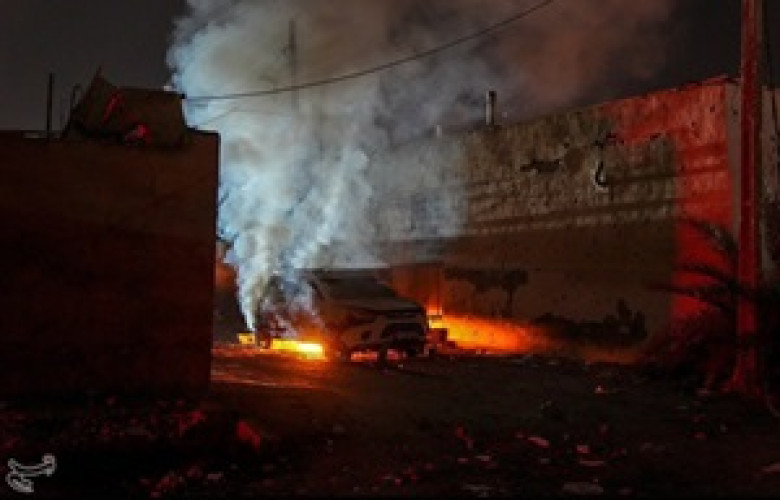
Moscow will be watching the evolving conflict in Iran with dismay and chagrin. Russia’s ties with Iran have been wary, complicated and often acrimonious. But shared circumstances – isolation, sanctions and hostility towards, and from, the West – have thrown these two international pariahs closer together in recent years. Not that Khamenei, any more than Venezuela’s Maduro or Syria’s Assad, was seriously expecting the hard-nosed realists in the Kremlin to ride to Tehran’s assistance. But this will be at least reputationally uncomfortable for Moscow and an example doubtless not lost on other Russian partners globally.
Despite the impressive-sounding Comprehensive Strategic Partnership agreement signed by Russia and Iran last year, this has never been a trusting relationship, but rather an alliance of convenience, characterised by pragmatic, limited and transactional cooperation.
And Russia no more wants to see Iran acquire a nuclear weapons capability than does Israel or the United States (for all the support it has historically provided for development of Iran’s civil nuclear energy facilities). Indeed, Moscow was a key party in diplomatic negotiations leading to the Joint Comprehensive Plan of Action (JCPOA) in 2015.
As Deputy Foreign Minister Andrey Rudenko (prophetically) emphasised to the State Duma last year, the Comprehensive Strategic Partnership agreement is not a mutual defence treaty – entailing no obligations to come to the other partner’s assistance when attacked.
So it was unlikely that when Iranian Foreign Minister Araghchi spoke with his Russian counterpart Sergei Lavrov shortly following the outbreak of hostilities, he had any serious expectation of much more than political solidarity from Moscow.
And indeed Russia duly delivered this rhetorical support: in an official statement on Saturday, the Russian foreign ministry criticised the “reprehensible” US-Israeli attacks as a “deliberate, premeditated, and unprovoked act of armed aggression against a sovereign and independent UN member state, in direct violation of the fundamental principles and norms of international law” – echoing this message in the emergency UN Security Council meeting later the same day. President Vladimir Putin sent a condolences message to his Iranian counterpart, condemning Khamenei’s “assassination” as a “cynical violation of all norms of human morality and international law”.
The irony of these disingenuous statements by a Russian government that has itself invaded and waged a brutal war in Ukraine these past four years will be lost on few observers.
Russia has seen Iran as potentially offering an alternative, sanctions-free, trade and energy corridor through to the Indian Ocean and wider world, via the planned “North South Trade Corridor”. Indeed, negotiations on a new railway in northern Iran, representing a key missing link in the NSTC, were due to be finalised shortly.
Moscow last year secured a US$25 billion contract to build four new large civilian nuclear reactors in Iran, supplementing the existing Bushehr facility.
In recent years defence cooperation has intensified. Iranian-supplied Shahed 136 drones (now being manufactured in Tatarstan) have proved crucial for Russia in waging its war in Ukraine. Tehran has seen Russia as a key source of military hardware to modernise its inadequate and antiquated inventory, especially of aircraft (with new SU35 fighter planes (projected), combat trainers and MI28 attack helicopters), but also armoured vehicles. Russia reportedly agreed recently to supply shoulder-mounted anti-aircraft weapons to Iran.
The prospects for all these plans are now, at minimum, uncertain.
Nonetheless, Moscow will be looking to draw advantage in the unfolding situation in and around Iran. Notably, it’s in close contact with its “no limits” partner Beijing about developments.
First, and most immediately, Moscow will welcome the spike in oil and gas prices the conflict will inevitably cause on global energy markets, especially if the Strait of Hormuz remains closed to oil tankers leaving the Gulf. Dwindling oil and gas revenues have seriously strained Russian government finances, already under pressure from high levels of defence spending to pursue the war in Ukraine.
Secondly, while not wanting matters to spiral out of control, Moscow will be hoping the US finds itself embroiled in a costly conflict (in both blood and treasure), that aggravates political and social tensions at home and leads to a rupture in Washington’s political and security relationships with key Middle East partners, providing opportunities eventually for a pragmatic Moscow to rebuild influence, both in Iran and the wider region (as it has been trying to do with the new rulers in Damascus).
And thirdly, Moscow will be hoping to capitalise on the likely negative implications of the Iran conflict for the war in Ukraine.
At the very least, events in and around Iran will shift the spotlight, distracting both US and European political and media attention away from Ukraine, thereby easing pressure on Moscow. Depending on their duration and success, the US-Israeli attacks may strain stocks and production capacity of key US munitions, making it harder for Kyiv’s European supporters to purchase badly-needed military materiel from the US to replenish Ukraine’s hard-pressed forces. This in turn might expose defensive weaknesses, encouraging Russia to step up offensive operations in eastern Ukraine.
An initial assessment, then, might reasonably interpret developments in Iran as a setback for Russia, bilaterally and reputationally. But the reality is more nuanced than this. Depend on it: in these early days, Moscow will be patiently assessing opportunities to advance its interests from the unfolding conflict.
Photo: Tasnim News Agency, CC BY 4.0 <https://creativecommons.org/licenses/by/4.0>, via Wikimedia Commons

Membership
NZIIA membership is open to anyone interested in understanding the importance of global affairs to the political and economic well-being of New Zealand.