Canada’s Perspectives on Indigenous Rights, UNDRIP, and International Indigenous Cooperation
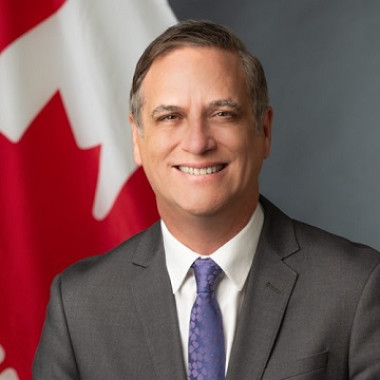
HE Keith Smith, High Commissioner for Canada in New Zealand
Thursday, 16 April 2026 7:30pm
Wairarapa
Rosewood, 417 Queen Street, Kuripuni, Masterton
This month’s meeting will begin with a short AGM, comprising the Chairman’s Report, the Treasurer’s Financial Report, and an election for vacancies on the Committee.
The High Commissioner’s talk will offer an overview of Canada’s current approach to Indigenous rights, drawing on his personal experience as a member of Thessalon First Nation and his professional experience as a senior public servant, including leading the development of the Government of Canada’s action plan to achieve the objectives of the UN Declaration on the Rights of Indigenous Peoples (UNDRIP).
His talk will cover Canada’s domestic commitments within a broader international context, with particular attention to cooperation between Indigenous peoples and governments, as well as synergies between Canada and Aotearoa New Zealand. Canada has played a leading role in the post-colonial world for recognising the rights of indigenous people. Indigenous Canadians comprise the First Nations, Inuit, and Métis, representing roughly 5% of the total Canadian population. There are over 600 recognized First Nations governments or bands with distinctive cultures, languages, music and other arts.
The modern Indigenous right to self-government provides for Indigenous self-government in Canada - and the management of cultural, political, health and economic responsibilities within Indigenous communities. National Indigenous Peoples Day (21 June) recognizes the many cultures and the contributions of Indigenous peoples to the history of Canada.
Coffee and tea are available from 7pm. Non-members are welcome, with a $5 koha. High school or UCOL students are welcome with free entry.
This month’s meeting will begin with a short AGM, comprising the Chairman’s Report, the Treasurer’s Financial Report, and an election for vacancies on the Committee.
The High Commissioner’s talk will offer an overview of Canada’s current approach to Indigenous rights, drawing on his personal experience as a member of Thessalon First Nation and his professional experience as a senior public servant, including leading the development of the Government of Canada’s action plan to achieve the objectives of the UN Declaration on the Rights of Indigenous Peoples (UNDRIP).
His talk will cover Canada’s domestic commitments within a broader international context, with particular attention to cooperation between Indigenous peoples and governments, as well as synergies between Canada and Aotearoa New Zealand. Canada has played a leading role in the post-colonial world for recognising the rights of indigenous people. Indigenous Canadians comprise the First Nations, Inuit, and Métis, representing roughly 5% of the total Canadian population. There are over 600 recognized First Nations governments or bands with distinctive cultures, languages, music and other arts.
The modern Indigenous right to self-government provides for Indigenous self-government in Canada - and the management of cultural, political, health and economic responsibilities within Indigenous communities. National Indigenous Peoples Day (21 June) recognizes the many cultures and the contributions of Indigenous peoples to the history of Canada.
Coffee and tea are available from 7pm. Non-members are welcome, with a $5 koha. High school or UCOL students are welcome with free entry.

Membership
NZIIA membership is open to anyone interested in understanding the importance of global affairs to the political and economic well-being of New Zealand.