Egypt: A Major Role within the Middle East
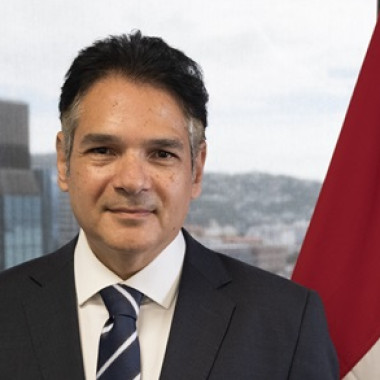
HE George Azer Saleeb Tadros, Ambassador of the Arab Republic of Egypt to New Zealand
Thursday, 26th March 2026 6:00pm
Wairarapa
Te Rangimarie Marae, 131 Cole Street, Masterton
One of the major nations in the Middle East is Egypt, at the junction of Africa and Asia and just across the sea from Europe. Egypt has a proud 5000 year history and - with the Suez Canal today – remains central to the geopolitics of today’s world. The Nile River is the nation’s artery; some 3000 years BCE civilisation developed along the banks of that life-giving river. It remains vital for the economic health of Egypt.
Today the nation has a population of over 100 million – it is the third largest in Africa - and its economy is second only to South Africa’s on the continent. With its unique geographical location, Egypt’s political and economic focus includes the Middle East, Africa and the Mediterranean.
In 1945 Egypt was a founder member of the Arab League and of the UN; Egypt was also a founder member to the African Union in 1963. Egypt has its own border with Gaza. There is a peace treaty between Egypt and Israel and the Multi National Force and Observers (to which New Zealand is a contributor) has been in place in the Sinai since 1980.
Many New Zealanders had served in Egypt in two world wars; today young tourists travel to Cairo to experience this unique country. But for New Zealand our interconnectedness with the world, the changing nature of geopolitics, and the evolution of new threats mean our country is as affected as other countries by global trends, major conflict, and the complex international environment.
Our government is concerned that we can no longer rely on the durability of international cooperation and trade liberalisation, which had been the foundation of our foreign, trade and economic policies. Given the volatility of the Middle East, Egypt has shown a quiet determination to maintain peace and support stability across the region. Thus, the perspectives of Egypt are relevant to us.
Ambassador Tadros originally trained as a doctor and later as a cardiac specialist in Egypt, before joining the Ministry of Foreign Affairs and serving in various diplomatic posts both in Cairo and overseas. He has served in Mozambique, Greece, Turkey, and Ethiopia before his current posting to New Zealand. He will bring this wide diplomatic background to his talk to our Branch.
A different location:
Our Branch of the NZIIA will hold this public meeting at Te Rangimarie Marae at 131 Cole Street, Masterton at 6pm on Thursday 26 March.
Please park on Cole Street.
Please note that our Branch AGM has been postponed until our April meeting, 16 April.
The March meeting will take place in the wharekai, the dining hall, at the Marae. The usual rules of public discourse apply. Coffee and tea are available from 5.30pm. Non-members are welcome, with a $5 koha. High school or UCOL students are welcome with free entry.
One of the major nations in the Middle East is Egypt, at the junction of Africa and Asia and just across the sea from Europe. Egypt has a proud 5000 year history and - with the Suez Canal today – remains central to the geopolitics of today’s world. The Nile River is the nation’s artery; some 3000 years BCE civilisation developed along the banks of that life-giving river. It remains vital for the economic health of Egypt.
Today the nation has a population of over 100 million – it is the third largest in Africa - and its economy is second only to South Africa’s on the continent. With its unique geographical location, Egypt’s political and economic focus includes the Middle East, Africa and the Mediterranean.
In 1945 Egypt was a founder member of the Arab League and of the UN; Egypt was also a founder member to the African Union in 1963. Egypt has its own border with Gaza. There is a peace treaty between Egypt and Israel and the Multi National Force and Observers (to which New Zealand is a contributor) has been in place in the Sinai since 1980.
Many New Zealanders had served in Egypt in two world wars; today young tourists travel to Cairo to experience this unique country. But for New Zealand our interconnectedness with the world, the changing nature of geopolitics, and the evolution of new threats mean our country is as affected as other countries by global trends, major conflict, and the complex international environment.
Our government is concerned that we can no longer rely on the durability of international cooperation and trade liberalisation, which had been the foundation of our foreign, trade and economic policies. Given the volatility of the Middle East, Egypt has shown a quiet determination to maintain peace and support stability across the region. Thus, the perspectives of Egypt are relevant to us.
Ambassador Tadros originally trained as a doctor and later as a cardiac specialist in Egypt, before joining the Ministry of Foreign Affairs and serving in various diplomatic posts both in Cairo and overseas. He has served in Mozambique, Greece, Turkey, and Ethiopia before his current posting to New Zealand. He will bring this wide diplomatic background to his talk to our Branch.
A different location:
Our Branch of the NZIIA will hold this public meeting at Te Rangimarie Marae at 131 Cole Street, Masterton at 6pm on Thursday 26 March.
Please park on Cole Street.
Please note that our Branch AGM has been postponed until our April meeting, 16 April.
The March meeting will take place in the wharekai, the dining hall, at the Marae. The usual rules of public discourse apply. Coffee and tea are available from 5.30pm. Non-members are welcome, with a $5 koha. High school or UCOL students are welcome with free entry.

Membership
NZIIA membership is open to anyone interested in understanding the importance of global affairs to the political and economic well-being of New Zealand.