Strategic Hedging in Trump 2.0
Professor Cheng - Chwee Kuik, National University of Malaysia
Friday, 22 May 2026 6:00pm
Auckland
AUT City Campus, Room WG126, Level 1 WG Building
Hedging is a relatively new concept in the study of International Relations, though not a new behaviour in world politics. Despite being persistent and prevalent, it remains widely misunderstood — dismissed by some in scholarly and policy circles as speculative, indecisive, or naïve. This talk challenges each characterization.
Hedging is not speculative: it manages uncertainty by deliberately avoiding speculation. It is not indecisive: it reflects an active choice not to choose sides. And it is not naïve: it is a pragmatic response to the structural uncertainties of big-power relations.
Drawing on cross-disciplinary insights, the speaker argues that hedging is best understood as an instinctive, insurance-maximising behaviour. Under conditions of high-stakes and high-uncertainty, governments hedge by actively avoiding alignment with any single great power, inclusively diversifying their economic and strategic partnerships, and adaptively offsetting multiple risks — all in order to preserve their agency and keep options open as power shifts and the reliability of partners fluctuates.
Speaker Bio:
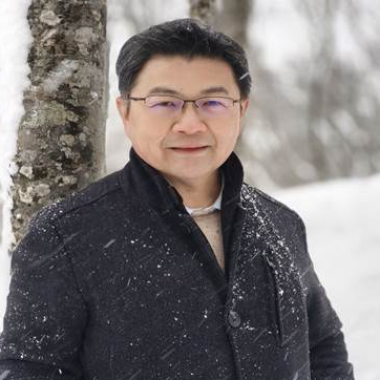
Dr. Kuik Cheng-Chwee is Professor of International Relations at the Institute of Malaysian and International Studies (IKMAS), Universiti Kebangsaan Malaysia (UKM) and concurrently a Nonresident Senior Fellow at the Johns Hopkins University SAIS Foreign Policy Institute (Washington, DC). Previously, he was a Postdoctoral Fellow at the Princeton-Harvard China and the World Program.
His research focuses on non-great-power alignment behavior, Southeast Asian international relations, and Asian security. Professor Kuik is the author of Theorizing Hedging: Explaining Shifts and Variations in Alignment Choices (Cambridge University Press, 2026, forthcoming), co-author (with David Lampton and Selina Ho) of Rivers of Iron: Railroads and Chinese Power in Southeast Asia (2020), and co-editor (with Alice Ba and Sueo Sudo) of Institutionalizing East Asia (2016).
A regular speaker at international conferences and closed-door policy roundtables, Cheng-Chwee serves on the editorial boards of Contemporary Southeast Asia, Australian Journal of International Affairs, Journal of East Asian Studies, and several other international journals.
Dr. Kuik holds an M.Litt. from the University of St Andrews and a Ph.D. from Johns Hopkins University. He has been listed among Stanford University’s list of the World’s Top 2% Scientists in the subfield of International Relations for 2023, 2024, and 2025.
Hedging is a relatively new concept in the study of International Relations, though not a new behaviour in world politics. Despite being persistent and prevalent, it remains widely misunderstood — dismissed by some in scholarly and policy circles as speculative, indecisive, or naïve. This talk challenges each characterization.
Hedging is not speculative: it manages uncertainty by deliberately avoiding speculation. It is not indecisive: it reflects an active choice not to choose sides. And it is not naïve: it is a pragmatic response to the structural uncertainties of big-power relations.
Drawing on cross-disciplinary insights, the speaker argues that hedging is best understood as an instinctive, insurance-maximising behaviour. Under conditions of high-stakes and high-uncertainty, governments hedge by actively avoiding alignment with any single great power, inclusively diversifying their economic and strategic partnerships, and adaptively offsetting multiple risks — all in order to preserve their agency and keep options open as power shifts and the reliability of partners fluctuates.
Speaker Bio:
Dr. Kuik Cheng-Chwee is Professor of International Relations at the Institute of Malaysian and International Studies (IKMAS), Universiti Kebangsaan Malaysia (UKM) and concurrently a Nonresident Senior Fellow at the Johns Hopkins University SAIS Foreign Policy Institute (Washington, DC). Previously, he was a Postdoctoral Fellow at the Princeton-Harvard China and the World Program.
His research focuses on non-great-power alignment behavior, Southeast Asian international relations, and Asian security. Professor Kuik is the author of Theorizing Hedging: Explaining Shifts and Variations in Alignment Choices (Cambridge University Press, 2026, forthcoming), co-author (with David Lampton and Selina Ho) of Rivers of Iron: Railroads and Chinese Power in Southeast Asia (2020), and co-editor (with Alice Ba and Sueo Sudo) of Institutionalizing East Asia (2016).
A regular speaker at international conferences and closed-door policy roundtables, Cheng-Chwee serves on the editorial boards of Contemporary Southeast Asia, Australian Journal of International Affairs, Journal of East Asian Studies, and several other international journals.
Dr. Kuik holds an M.Litt. from the University of St Andrews and a Ph.D. from Johns Hopkins University. He has been listed among Stanford University’s list of the World’s Top 2% Scientists in the subfield of International Relations for 2023, 2024, and 2025.

Membership
NZIIA membership is open to anyone interested in understanding the importance of global affairs to the political and economic well-being of New Zealand.