Threadbare Futures: Governance Narratives during the Climate Interregnum
Dr Cathrine Dyer, Lecturer in Climate Change at Te Herenga Waka | Victoria University of Wellington
2026-10-08
NEW ZEALAND
ENERGY AND ENVIRONMENT
From New Zealand International Review Sep/Oct 2026
Internationally, the 1.5°C target continues to organise ambition and cooperation, even as its achievement relies on increasingly optimistic assumptions about overshoot-and-return pathways. In Aotearoa New Zealand, climate commitments remain part of official discourse while key policy settings have been dismantled or weakened.
In an article in the most recent edition of the New Zealand International Review, Threadbare Futures: Governance Narratives during the Climate Interregnum, Cathrine Dyer describes this as a “climate interregnum”: a period in which institutions continue to operate but are becoming poorly matched to the scale and nature of the climate predicament. She examines why these “threadbare narratives” persist, how they contribute to a recursive institutional adaptation trap, and why delaying adaptation may progressively narrow the range of governable futures.
The article concludes by shifting attention from institutions alone to the relationships through which governability is produced. Dyer considers how trust, collective action, situated knowledge and new forms of institutional experimentation might help sustain the capacity to govern in a deteriorating climate. Read the full article below.
To access the full edition of the New Zealand International Review become a member of the NZIIA here or purchase individual editions here.
_________________________________________________________________________________________________________________________________________
Internationally, governments continue to affirm the feasibility of limiting warming to 1.5°C through overshoot-and-return pathways despite increasingly implausible assumptions. In Aotearoa New Zealand, climate policy similarly exhibits growing tension between stated commitments and emerging policy directions. This paper argues that these increasingly threadbare governance narratives are not simply failures of political communication or ambition, but symptoms of a deeper institutional predicament.
Drawing on the concept of the climate interregnum, and integrating insights from governmentality, the disclosure trap and historical institutionalism, this article argues that governance narratives perform an essential role in maintaining institutional legitimacy and governability. As climate realities deteriorate, however, inherited narratives become progressively less capable of organising collective action, even as institutions become increasingly dependent upon them. This creates a recursive institutional adaptation trap in which efforts to preserve short-term governability delay institutional adaptation, further narrowing the range of governable futures. The article concludes that the central challenge of the climate interregnum is not simply accelerating decarbonisation, but maintaining the capacity to govern a progressively deteriorating climate predicament.
Narratives That No Longer Fit
Climate science is increasingly focused on the escalation of interconnected and cascading risks (Kemp et al., 2022). The complexity and entanglement of climate risks with other systemic stressors have been characterised as a ‘global polycrisis’ (Lawrence et al., 2024). Alongside this development, a veritable Cambrian explosion of increasingly sophisticated institutional forms has emerged within the international climate change policy regime, creating an inter-nested ecosystem as complex as the issue it seeks to address (Zhang & Bai, 2023). Zhang & Bai (2023) argue that a wider variety of participation enables deeper expertise and policy innovation to emerge from various pockets or niches, while also risking increasing fragmentation and incoherency. Yet official narratives, at both international and domestic levels, have instead become increasingly threadbare, resting on assertions that existing, incremental governance pathways remain adequate.
Internationally, commitment to a 1.5˚C target is being preserved by a narrative of overshoot-and-return (Keating & McSweeney, 2025). However, the ability to achieve this is presented in much more confident terms than the underlying science warrants (Schleussner et al., 2024). Meanwhile, in New Zealand, continued commitment to the Paris Agreement is regularly asserted, even as the underlying policy scaffolding for achieving nationally determined contributions (NDCs) is systematically deconstructed, disavowed, or in the case of the already fragile emissions trading scheme (ETS), further weakened to reduce corporate financial burdens (Mclachlan, 2023; Chapman Tripp, 2025). Although political inconsistency is present, in combination, these are signals of a deeper malaise in contemporary climate governance.
The divergence between policy trajectories and institutional climate narratives is a signpost for the emerging climate governance interregnum. While the narratives continue to perform commitment to global cooperation and a manageable transition, the underlying political and institutional conditions increasingly undermine their plausibility. This divergence is not simply reflective of political failure, but of a deeper crisis of governability in which institutions struggle to acknowledge realities that challenge the frameworks through which they govern.
The Climate Interregnum
Originating with Antonio Gramsci, the concept of interregnum describes an in-between period of governance during which an established order is losing its capacity to organise society, while a new order is yet to emerge. According to Gramsci ‘the crisis consists precisely in the fact that the old is dying and the new cannot be born; in this interregnum a great variety of morbid systems appear’ (Gramsci, 1971, p.359). The concept has been applied by modern scholars to describe periods of institutional uncertainty, legitimacy crises, and contested political transformations.
The concept of interregnum can be used to describe situations in which institutions continue to operate, but they are no longer well-matched to the type or scale of problems they are attempting to govern. During such a period, existing rules, norms and governance arrangements remain in place because no viable alternative has achieved sufficient political legitimacy or institutional support, even though confidence in the existing order is eroding. Babic (2020) contends that the liberal international order is currently in such a period of crisis and instability as the world undergoes a grand transformation characterised by three systemic attributes – processuality (describing an extended process rather than a static event), organicity (it challenges the fundamental nature of social order as opposed to a conjunctural or everyday political crisis), and morbidity (produces symptoms that cannot be managed such as political violence, mass discontent, or the rise of extreme political positions).
The notion of interregnum can also provide a more insightful analytical framework for the climate crisis. Thaler (2026) argues that the alternative framework, the ubiquitous ‘fossil fuel transition’ narrative, falls short in three key respects. Firstly, its political corruptibility – it is pervasively and systematically co-opted by powerful actors, as demonstrated during the Dubai COP28 meeting when the conflict between the ‘phase down’ or ‘phase out’ of fossil fuels was resolved by the endlessly fungible ‘transition away’ (Lempriere & Evans, 2023, December 5). Secondly, its historical inadequacy – as argued by Fressoz (2024), the view that an emerging energy system substitutes the preceding one in a linear fashion, rather than being additive, is empirically inaccurate. And thirdly, its conceptual confusion, which is marked by the absence of a meaningful social imaginary about the end state of such a transition. The energy transition paradigm provides the comforting concept of a process whose end is in sight, while failing to adequately reflect the scale and open-endedness of the ecological challenge. This, Thaler argues, affords elite actors an opportunity to uphold the status quo. Thaler emphasises the organicity and morbidity of climate symptoms, along with the additional uncertainty of outcomes, to support the utility of an interregnum framework for the climate crisis.
The climate interregnum is proposed here as a way to understand the background conditions in which institutions must continue to govern. One way that interregnums become visible is through the increasing strain present within the narratives that previously organised political expectations.
The fraying of governing stories
Threadbare narratives have observable features. I propose four defining characteristics that are demonstrated by governing narratives at both international and domestic levels. These include increasing reliance on optimistic assumptions, growing divergence from observable trajectories, avoidance of politically difficult implications, and declining explanatory power.
At the international level, the 1.5˚C target has become institutionally necessary because of the coordinating functions that have been organised around it. It acts as the primary guardrail for the Paris Agreement, maintaining collective ambition and sustaining diplomatic cooperation. Maintaining pursuit of the target is presented as a legal and ethical imperative, despite explicit recognition that the chances of keeping warming to 1.5˚C have likely already passed (Rogelj & Rajamani, 2025). Nevertheless, maintaining the target avoids reopening fundamental questions about responsibility and feasibility, preventing geopolitical fragmentation over the question of who should bear the burden. Maintaining pathways to achieving the target also relieves institutions of the need to seriously grapple with the scale of damage to human society that will attend its failure.
According to Rogelj & Rajamani (2025), maintaining the ‘operational relevance’ of the 1.5˚C target while staying below 2˚C implies a massive scale-up of carbon capture and storage technologies, deployed mostly after 2030, assuming the achievement of nationally determined contributions (NDCs) at current settings. This massive deployment has significant and under-researched implications in terms of energy requirements and competition over food production, land and water. Further, there is no guarantee that temperature decline after overshoot is achievable within the timescales, even if such a large-scale attempt were made (Schleussner et al., 2024). Yet optimistic assumptions about the feasibility of such pathways are already built in to Integrated Assessment Models (IAMs) through a process of ‘political calibration’ that has called into question the neutrality of IAMs. Van Beek et al. (2022) examined the science-policy dynamics at play during work on the IPCC’s Special Report on 1.5˚C and observed ‘a sequence of mutually legitimising interactions between modelling and policy making through which the 1.5˚C goal gradually gained traction in global climate politics’ (p.193). They point to a dilemma faced by modellers between ‘the requirements of the policy process and experts’ convictions about realism’ (p.193).
The point is not whether the 1.5˚C target is desirable, nor whether is it ethically necessary for providing a safe and liveable planet for current and future generations. It is both of these things. The issue is that the narrative surrounding its achievement increasingly relies on assumptions that are insufficiently interrogated, and which fray the storyline.
The case in New Zealand demonstrates a different version of the same underlying condition. The current New Zealand Government’s scrapping of 35 climate policies and programs since taking office in 2023 led to a court challenge by two groups of environmental lawyers. The lawsuit questioned the government’s overreliance on tree planting to reduce emissions in its second emissions reduction plan, and the lack of public consultation when cancelling programs and policies that were part of the country’s first emissions reduction plan, claiming that the approach could no longer meet the requirements of the country’s framework climate law (Drugmand, 2025, June 10). Since then, the Government has made further changes to the few remaining policy tools for cutting domestic emissions, delinking the Emissions Trading Scheme (ETS) from the country’s Paris Agreement pledge, and weakening the target for methane emissions from livestock. These changes have contributed to a widening gap between domestic targets and the country’s commitments under the Paris Agreement, increasing uncertainty about the feasibility of delivery (Dyer, 2025, November 11). Despite experts pointing to the implausibility of the claim, Government Ministers have repeatedly asserted that the 2030 targets will be met without the use of offshore mitigation (Newton, 2025, December 4).
The effect of policy choices on the country’s mitigation trajectory makes it difficult to reconcile with achievement of the 2030 NDC under the Paris Agreement, yet official discourse continues to maintain alignment with the commitment. This discourse exhibits all of the characteristics of a threadbare narrative. These threadbare narratives are far from isolated inconsistencies, but rather, appear symptomatic of a deeper problem.
Why Threadbare Narratives Persist, Despite Increasing Scepticism
One might ask why, despite their growing irreconcilability with observed trajectories, institutions continue to deploy threadbare narratives, rather than simply replacing them. Policy institutions increasingly recognise the cascading threats, systemic risks, and adaptation limits indicated by climate science. Yet, official narratives continue to be organised around inherited commitments, targets and transition pathways whose underlying assumptions appear progressively more strained.
One way of understanding this is through the lens of Michel Foucault’s concept of governmentality, which suggests that governments do not simply make decisions; they construct realities that can be effectively governed. Governmentality describes how institutions govern through representations that render complex realities legible and administratively manageable, producing statistics, expert diagnoses and administrative processes that enable interventions on populations (Parada-Ulloa et al., 2026). Thus, climate targets, emissions pathways, scenarios, and so on, become objects through which political power is exercised. Climate change itself has been rendered governable through the production of ‘calculative devices’ such as carbon budgets, emissions trading schemes, nationally determined contributions and integrated assessment models (Oels, 2013).
This suggests that climate governance narratives perform an institutional function that extends beyond communication. They are tools for coordinating expectations, stabilising investment, structuring international cooperation and providing an intelligible account of where society is heading. Even when narratives become threadbare, they may still be performing critical coordinative functions and therefore cannot be easily abandoned. Indeed, institutions rarely abandon governing paradigms abruptly, choosing to resist change by extending existing ones, even as the conditions that gave rise to them change. The tendency toward institutional inertia can be driven by mechanisms such as path dependency (Munck af Rosenschöld et al., 2014).
Contemporary climate governance was constructed in a period of relative geopolitical and climate stability, during which confidence was high in the ability of society to progressively mitigate emissions through hard-won incremental advances in international cooperation, technological innovation and market-based instruments. That context has changed markedly in the last decade as a result of accelerating climate impacts, increasing understanding of Earth system tipping points, growing political fragmentation and widening adaptation gaps (Leverman, 2026).
Even while existing narratives and representations continue to coordinate institutional responses and preserve short-term governability, they have become progressively less capable and more difficult to reconcile with emerging realities. This growing strain is visible in the ‘threadbare futures’ referred to in this article’s title.
The Delayed Disclosure Trap
The problem is that the impacts from climate change are accelerating over time, and many of the ‘morbid’ symptoms that accumulate during an interregnum are effectively permanent, or, at least, irreversible within human timeframes. These characteristics mean that extending narratives to preserve short-term governability, while avoiding a confrontation with reality, may be weakening the prospects for long-term governability.
Laurie Laybourn, a United Kingdom (UK) think tank-based researcher with links to Chatham House and the University of Exeter, has identified two distinct, but related, risks to climate governance. These are ‘delayed disclosure traps’ and ‘derailment risk’. Laybourn argues that governments increasingly face situations in which openly acknowledging the full implications of worsening climate realities may itself threaten political governability (Laybourn, 2025, April 1). When disclosure of risk reveals predicaments for which institutions have no politically viable or socially acceptable responses, it can undermine public confidence in the very institutions responsible for governing the situation. In response, institutions are incentivised to avoid disclosure, while the underlying predicament worsens, making future disclosures even more disruptive. This, he suggests, is the reason behind the UK government’s refusal to release a recent National Security Assessment report on climate change and biodiversity loss that identified the risk of an ecosystem collapse overseas having catastrophic implications for food security in the UK (Harvey, 2026, July 8). A heavily redacted version of the report was eventually released in response to freedom of information requests. Laybourn has since appeared before an Environmental Audit Committee of the House of Commons to provide oral evidence on the dynamics of delayed disclosure traps in relation to that report (House of Commons Environmental Audit Committee, 2026). During that testimony, he concludes
Really, the situation here is that we are applying models of government and governance, as well as ideas of security, that are now outdated. We are now trying to apply them awkwardly and, in many ways, incorrectly to something that, as a society and a world, we have never faced before, which is the overall Earth system. The system of systems that makes up nature, and therefore enables everything, is now critically destabilised, and we do not really have appropriate governance for the scale of the situation. (pp23-24).
Laybourn has developed this insight further through the concept of ‘derailment risk’. Derailment risk is ‘the risk that humanity’s efforts to remain within a safe operating space are derailed by interacting biophysical and socio-economic factors’ (Laybourn et al., 2023, p.1172). Conventional approaches to climate risk governance, particularly in financial domains, distinguish between physical risk and transition risk. Physical risk is the direct financial or material threat posed by the actual consequences of a changing climate, such as damage from extreme weather events, rising temperatures and sea-level rise. Transition risk is the economic and financial impact of society moving toward a low-carbon economy, including regulatory changes, new technologies and shifting market demands. The idea is that societies can make decisions and trade-offs in relation to the mix of risks that are addressed, depending on what transition pathway they choose. An international collaboration between central banks and supervisors, including the Reserve Bank of New Zealand, known as the Network for Greening the Financial System (NGFS, 2025), uses this approach in designing climate scenarios to test the stability of countries’ financial systems. Laybourn et al. (2023) suggest that the approach neglects the interaction between the two types of risk, whereby climate disruption from physical impacts can undermine society’s capacity to undertake a transition.
Delayed disclosure traps create a false sense of stability in financial systems, building fragility that can result in a ‘Minsky moment’ when reality finally catches up. A Minsky moment refers to a sudden, major collapse in asset values that marks the end of a long period of market stability, economic growth, and speculative investment. Named after the American economist Hyman Minsky, the theory is built on his core concept that stability is destabilising (Wray, 2018). The potential for a ‘climate Minsky moment’ was famously raised by former Bank of England (BoE) Governor and current Canadian Prime Minister, Mark Carney, in his pivotal ‘Tragedy of the Horizon’ speech (Carney, 2015). Christophers (2017) later suggested that disclosure of climate risks might not stave off a climate Minsky moment, where tipping and cascading physical risks are systematically underpriced, and investor cynicism about governments’ commitments and capabilities lead them to fail to price transition risk.
Increasingly, climate disruption competes for political attention, fiscal resources, institutional capacity and public legitimacy, creating feedback that can slow or derail transformation and lock in vulnerability. New Zealand’s recent National Climate Risk Assessment from the Climate Change Commission (2026) points to the risks of eroding governability in New Zealand, signalling that derailment may be much closer than is commonly understood. Three of the top five most urgent risks identified in the report speak to whether governability can be sustained. These include risks to adaptation implementation, adaptation decision-making, and the ability to uphold Te Tiriti o Waitangi. These risks are considered major now and become extreme by 2090. A fourth risk, to the legitimacy of democratic institutions from contested climate decision-making, is considered moderate now, but becomes major by 2050 and extreme by 2090. The issue is also captured by one of the most quoted lines from the report, discussing research that ‘[.. suggests that 97% of the Government’s expenditure on natural hazards since 2010 has been on responding to and recovering from disasters, with only 3% on risk reduction and resilience’ (Climate Change Commission, 2026, p.113). With extreme events forecast to increase in frequency and scale as climate change progresses, the cost to respond and recover from disasters will continue to grow, putting increasing pressure on central and local government budgets that are already under pressure. The only way to constrain that cost in the future is to spend more in the near term on risk reduction and resilience, a part of the budget that is already being crowded out.
According to the Climate Change Commission (2026), governance of adaptation decision-making and delivery are central to addressing every other risk in the assessment (p.118). They call for the urgent prioritisation of adaptation investment and for the government to address ‘extreme’ shortfalls in policy (Newton, 2026, April 7). The Government’s initial attempts to respond to the report were insubstantial, judged by insurance giant IAG as ‘piecemeal’ and ‘not fit to meet the challenge’ (Newton, 2026, June 10). More recently, the Government has announced its intention to amend climate legislation, signalling that it is now ‘planning to plan’, by issuing planning mandates to local councils, absent funding or any clear investment intentions. This prompted one Mayor of a flood-prone region to suggest that anticipating funding was merely wishful thinking (Newton, July 16).
The thinness of the response is an indicator that governance capability is already seriously compromised. The problem is no longer simply whether climate policies are sufficiently ambitious, but whether worsening climate consequences are progressively eroding the political and institutional capacity required to implement those policies (although this may insufficiently account for the role that the increasing concentration of wealth and private lobbying on its behalf is playing in compromising environmental governance capability to the same ends (Doole & Stephens, 2025)).
Maintaining Governability of the Climate Crisis
Given the deteriorating nature of the climate predicament, the passage of time progressively closes the exits from the interregnum, leaving institutions stuck in an increasingly sticky trap. That leaves society with the prospect of a future that is chaotic and unstable, not as an in-between phase, but ad infinitum, perhaps marking the passage of a social tipping point in governability. The longer institutional adaptation is delayed, the more difficult governing becomes – in other words, time itself becomes an active causal force. Every year spent relying on threadbare narratives allows physical climate risks to intensify, transition pathways to steepen, and governability to weaken, as shown in Figure 1 below.
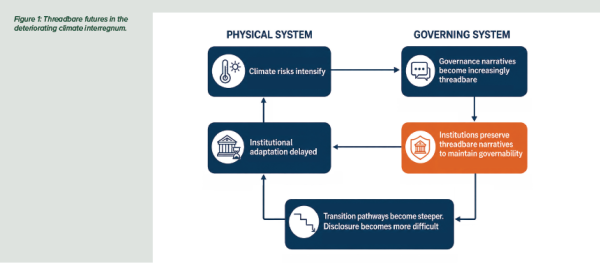
Figure 1 Threadbare futures in the deteriorating climate interregnum
Governing the climate transition thus moves beyond a technical or political challenge at the institutional level, to become an increasingly dynamic problem of maintaining collective capacity under conditions of escalating disruption. Governability is not, after all, a feature of governments, it is a feature of societies, the problems they face, and the relations between them. Governability is relational before it is institutional. Having completed a meta-review of climate adaptation literature, Moyo et al. (2026) concluded that adaptation inertia represents a profound failure of exactly that – the relational aspects of governance. Institutions govern partly because they coordinate relationships, expectations, trust and collective action. When those relationships weaken, institutions become less capable of governance. At the same time, if governability is an emergent property of relationships, then declining state capacity does not necessarily imply declining societal capacity. New capacities and narratives can emerge from communities, for instance, based on situated knowledge derived from their experience of living on the front lines of climate impacts.
If the central challenge of the climate interregnum is maintaining governability while threadbare narratives lose their organising capacity, then future research should pay greater attention to how governability itself is produced. This may involve looking beyond formal state institutions to the emergence of new forms of collective action, deliberation and institutional experimentation capable of rebuilding the social capacities upon which effective climate governance ultimately depends.
Bibliography
Babic, M. (2020). Let's talk about the interregnum: Gramsci and the crisis of the liberal world order, International Affairs, 96(3), 767–786. https://doi.org/10.1093/ia/iiz254
Climate Change Commission (2026) Priorities for Action: 2026 National Climate Change Risk Assessment for Aotearoa New Zealand. https://haveyoursay.climatecommission.govt.nz/comms-and-engagement/cc2f075f/user_uploads/2026-nccra-priorities-for-action---lo-res.pdf
Carney, M. (2015). Breaking the tragedy of the horizon–climate change and financial stability. Speech given at Lloyd’s of London, 29, 220-230. https://www.bankofengland.co.uk/speech/2015/breaking-the-tragedy-of-the-horizon-climate-change-and-financial-stability
Chapman Tripp. (2025, November 6). Significant further changes to New Zealand’s climate policy architecture. https://chapmantripp.com/trends-insights/significant-further-changes-to-new-zealand-s-climate-policy-architecture/
Christophers, B. (2017). Climate Change and Financial Instability: Risk Disclosure and the Problematics of Neoliberal Governance. Annals of the American Association of Geographers, 107(5), 1108–1127. https://doi.org/10.1080/24694452.2017.1293502
Doole, M. & Stephens, T. (2025). Drain the swamp to save the swamp: mitigating capture in environmental regulatory systems. Policy Quarterly, 21(1), 21-32. https://doi.org/10.26686/pq.v21i1.9712
Dyer, C. (2025, November 11). COP30: climate law changes mean NZ could retreat from its international obligations. The Conversation. https://theconversation.com/cop30-climate-law-changes-mean-nz-could-retreat-from-its-international-obligations-269087
Drugmand, D. (2025, June 10). New climate case challenges New Zealand’s emissions reduction plan, reliance on forestry offsets. Climate in the Courts. https://www.climateinthecourts.com/new-climate-case-challenges-new-zealands-emissions-reduction-plan-reliance-on-forestry-offsets/
Fressoz. J-B. (2024) More and More and More: An All-Consuming History of Energy. London: Allen Lane.
Gramsci, A. (1971). Selections From The Prison Notebooks Of Antonio Gramsci. International Publishers, New York, NY.
Harvey, F. (2026, July 8). UK has ‘no future’ if it fails to act on ecosystem collapse threatening national security. The Guardian. https://www.theguardian.com/global-development/2026/jul/08/uk-report-ecosystem-collapse-national-threat-food-security
House of Commons Environmental Audit Committee (2026). Oral evidence: National security assessment and COP17. HC-17593. [Oral evidence transcript]. UK Parliament. http://committees.parliament.uk/oralevidence/17593/pdf
Keating, C. & McSweeney, R. (2025, October 8). Overshoot: Exploring the implications of meeting 1.5˚C climate goal ‘from above’. Carbon Brief. https://www.carbonbrief.org/overshoot-exploring-the-implications-of-meeting-1-5c-climate-goal-from-above/
Kemp, L., Xu, C., Depledge, J., Ebi, K. L., Gibbins, G., Kohler, T. A., Rockström, J., Scheffer, M., Schellnhuber, H. J., Steffen, W., & Lenton, T. M. (2022). Climate Endgame: Exploring catastrophic climate change scenarios. Proceedings of the National Academy of Sciences, 119(34), e2108146119. https://doi.org/doi:10.1073/pnas.2108146119
Lawrence, M., Homer-Dixon, T., Janzwood, S., Rockström, J., Renn, O., & Donges, J. F. (2024). Global polycrisis: the causal mechanisms of crisis entanglement. Global Sustainability, 7, e6. https://doi.org/doi:10.1017/sus.2024.1
Laybourn, L., Evans, J., & Dyke, J. (2023). Derailment risk: A systems analysis that identifies risks which could derail the sustainability transition. Earth System Dynamics, 14(6), 1171-1182. https://doi.org/10.5194/esd-14-1171-2023
Laybourn, L. & Strategic Climate Risks Initiative (2025, April 1). Are we in a ‘delayed disclosure trap’? New Climate Reality. https://strategicclimaterisks.substack.com/p/are-we-in-a-delayed-disclosure-trap
Lempriere, M., & Evans, S. (2023, December 5). Q&A: Why defining the 'phaseout' of 'unabated' fossil fuels is so important at COP28. Carbon Brief. https://www.carbonbrief.org/qa-why-defining-the-phaseout-of-unabated-fossil-fuels-is-so-important-at-cop28/
Leverman, A. (2026). ‘Climate Freefall’: why the biggest risk to our economies is yet to be recognised. Nature, 655, 571-573.
McLachlan, R. I. (2023). Commentary: Climate policy in Aotearoa New Zealand – a backwards flip? Policy Quarterly, 19(4), 106–111. https://ojs.victoria.ac.nz/pq/article/view/8574
Moyo, T. N., Paramasivam, C., & Mashingaidze, T. M. (2026). Multi-level governance and climate change adaptation: A systematic literature review. Discover Sustainability, 7(1), Article 82. https://doi.org/10.1016/j.sftr.2026.101724
Munck af Rosenschöld, J., Rozema, J.G. & Frye-Levine, L.A. 2014. Institutional inertia and climate change: A review of the new institutionalist literature. WIREs Climate Change, 5(5). 639-648. https://doi.org/10.1002/wcc.292
Network for Greening the Financial System. (2025, November 19). Guide to climate scenario analysis for central banks and supervisors - 2025 version. Banque de France. https://www.ngfs.net/en/publications-and-statistics/publications/2025-guide-climate-scenario-analysis-central-banks-and-supervisors
Newton, K. (2025, December 4). Impossible to meet Paris Agreement targets without buying offshore carbon credits - experts. RNZ. https://www.rnz.co.nz/news/politics/580790/impossible-to-meet-paris-agreement-targets-without-buying-offshore-carbon-credits-experts
Newton, K. (2026, May 7). Climate Change Commission report urges ‘decisive’ action as major risks loom. RNZ. https://www.rnz.co.nz/news/environment/594507/climate-change-commission-report-urges-decisive-action-as-major-risks-loom
Newton, K. (2026, June 10). 'Ad hoc and piecemeal': Insurer IAG slams govt's approach to natural hazards in new report. RNZ. https://www.rnz.co.nz/news/environment_climate/597732/ad-hoc-and-piecemeal-insurer-iag-slams-govt-s-approach-to-natural-hazards-in-new-report
Newton, K. (2026, July 16). Govt help for climate adaptation 'wishful thinking' says mayor. RNZ. https://www.rnz.co.nz/news/community/726032/govt-help-for-climate-adaptation-wishful-thinking-says-mayor
Oels, A. (2013). Rendering climate change governable by risk: From probability to contingency. Geoforum, 45, 17-29. https://doi.org/doi:10.1016/j.geoforum.2011.09.007
Parada-Ulloa M, Marambio JB, Carmona H and Gutiérrez ÓV (2026) From knowledge as domination to knowledge as governmentality: a theoretical rearticulation of power in late-modern knowledge regimes. Frontiers in Sociology. 11. https://doi.org/10.3389/fsoc.2026.1799909
Rogelj, J., & Rajamani, L. (2025). The pursuit of 1.5°C endures as a legal and ethical imperative in a changing world. Science, 389(6757), 238-240. https://doi.org/doi:10.1126/science.ady1186
Schleussner, C.-F., Ganti, G., Lejeune, Q., Zhu, B., Pfleiderer, P., Prütz, R., Ciais, P., Frölicher, T. L., Fuss, S., Gasser, T., Gidden, M. J., Kropf, C. M., Lacroix, F., Lamboll, R., Martyr, R., Maussion, F., McCaughey, J. W., Meinshausen, M., Mengel, M., . . . Rogelj, J. (2024). Overconfidence in climate overshoot. Nature, 634(8033), 366-373. https://doi.org/10.1038/s41586-024-08020-9
Thaler, M. (2026). Transition or Interregnum? Two Ways of Understanding Politics in the Anthropocene. Political Studies, 0(0) https://doi.org/10.1177/00323217251410748
van Beek, L., Oomen, J., Hajer, M., Pelzer, P., & van Vuuren, D. (2022). Navigating the political: An analysis of political calibration of integrated assessment modelling in light of the 1.5 °C goal. Environmental Science & Policy, 133, 193-202. https://doi.org/10.1016/j.envsci.2022.03.024
Wray, L.R. (2018). Why Minsky Matters: An Introduction to the Work of a Maverick Economist. Princeton University Press. https://press.princeton.edu/books/paperback/9780691178400/why-minsky-matters
Zhang, L., & Bai, E. (2023). The Regime Complexes for Global Climate Governance. Sustainability, 15(11), 9077. https://doi.org/10.3390/su15119077
Individual copies of the New Zealand International Review may be purchased here.
Photo: U3196787, CC BY-SA 4.0 <https://creativecommons.org/licenses/by-sa/4.0>, via Wikimedia Commons

Membership
NZIIA membership is open to anyone interested in understanding the importance of global affairs to the political and economic well-being of New Zealand.